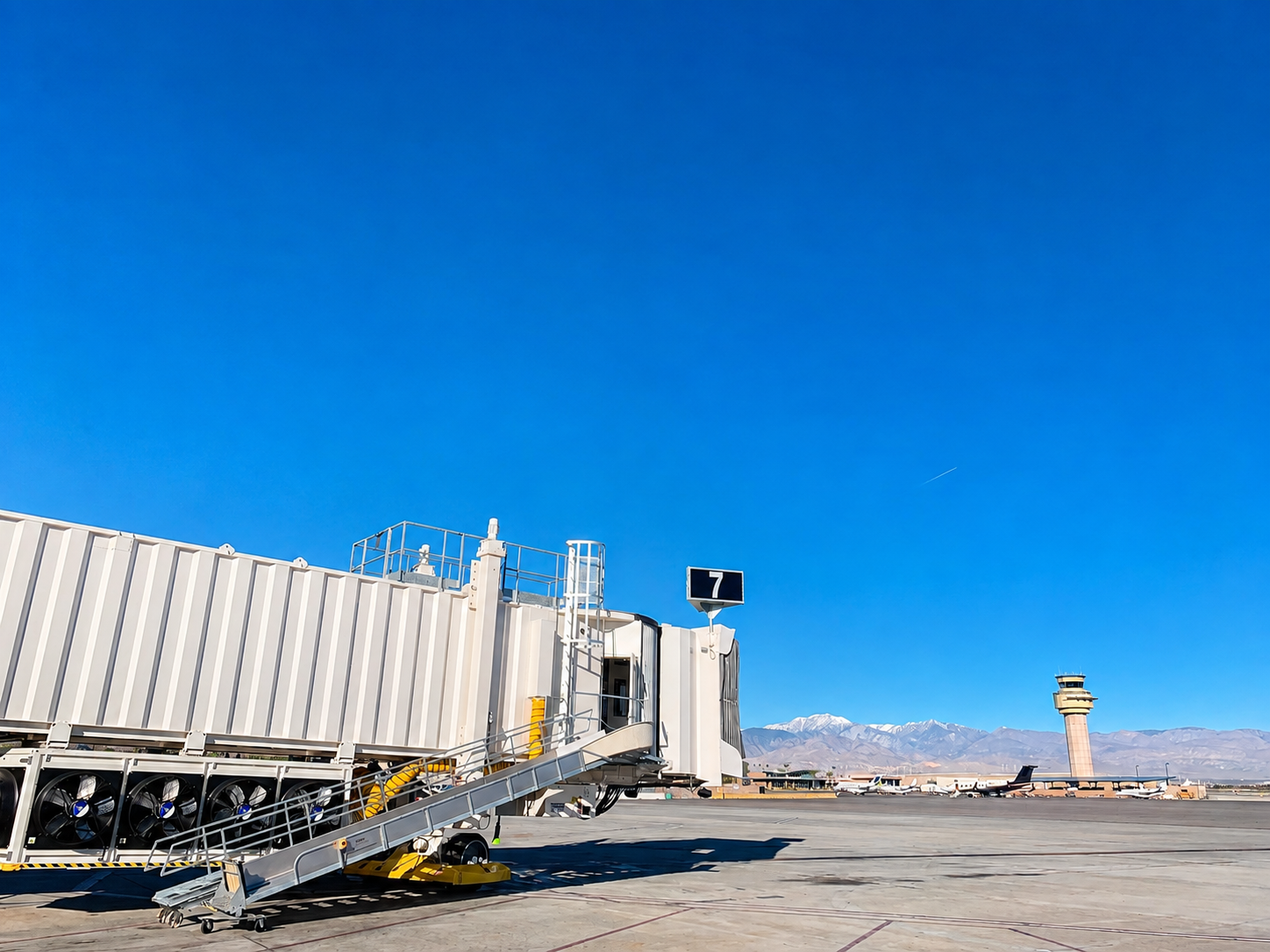
A Passenger Boarding Bridge Can Still Work and Yet Also Be a Risk
Even while passenger boarding bridges are operating reliably, as they age, hidden operational, maintenance, safety and capital risks are developing.
The fact that a passenger boarding bridge operated this morning does not tell you how much reliable service life it has left. It does not tell you what it will cost to keep the bridge running, whether critical parts will still be available, or whether the same problems are developing elsewhere in the fleet.
That is the difficulty with aging bridge equipment: the risk often builds slowly and stays out of sight until an outage affects gate availability, aircraft turns, or passenger boarding and deplaning.
The Failure Starts Before the Outage
Most boarding bridges do not move from reliable to failed in one step. The warning signs usually appear over time: Maintenance call-outs become more frequent. Operators need more manual intervention. Docking becomes less consistent. Controls become harder to support. Parts take longer to find. Repairs that once took a few hours start taking days.
A skilled maintenance team can keep aging equipment operating for a long time. A bridge may have a reasonable availability record only because the maintenance team knows its weaknesses and has developed ways to keep it running.
Unfortunately, that effort can also mask the true condition of the asset. The airport may see an operating bridge, but the maintenance group may see a bridge that is becoming harder to recover every time something goes wrong.
The Cost Is Larger Than the Repair Invoice
The cost of repairing a failed bridge is only one risk created by age-related deterioration and years of individual repairs and modifications made as problems arose.
The indirect costs of a bridge failure can extend well beyond the bridge itself. Bridge downtime can affect gate assignments, aircraft turns, passenger movements, airline operations and the use of airport staff. A repair may require emergency parts, outside service support, temporary operating procedures, or a longer gate closure than expected.
And it’s not only failure that constitutes risk to the airport. Aging equipment may also have accumulated years of repairs, component substitutions, control changes and field modifications. Documentation may no longer match what is installed. Safety devices and operating practices may vary from one bridge to another. These conditions can create compliance exposure, even when the equipment is still operating.
The worst time to make a capital decision is after a bridge has failed and the gate is already affected. At that point, the airport has fewer options, less time and more pressure to act.
Waiting can feel like avoiding cost. But in actuality, it can reduce the airport’s control over when and how the money is spent.
A Bridge Problem May Be a Fleet Problem
Proactively assessing the condition of a bridge can help prevent or delay its failure. But to most-effectively reduce wide-reaching risks, a bridge assessment should not only look for defects on individual units; it should also look for patterns across the fleet.
Many airports operate a mix of bridge ages, manufacturers, control generations and past modifications. One bridge may have an original control system, while another may have been partly modernized. And still others may have replacement parts that are no longer common across the fleet.
The result can be a maintenance and operating environment that becomes more complicated over time as individual problems are repaired, parts are replaced and modifications are made.
If the same problem appears on several bridges, it may point to a fleet concern, rather than an isolated defect.
Fleet Consistency Reduces Risk
Looking at the fleet as a whole can reveal risks that have developed over time and may not be obvious when each bridge is considered individually.
For example, some airports have two, three, or even four different operator-console layouts in their bridge fleet. Different controls, indications, alarms and operating sequences create unnecessary variation. That affects training, operator confidence, response during abnormal conditions and the ability to maintain consistent operating practices. Operators should not have to relearn the bridge every time they move to another gate.
Consistency is also important for safety. An assessment should consider whether safety systems and operating safeguards are appropriate and reasonably consistent across the fleet. Differences between bridges can create unnecessary risk for operators, maintenance staff and passengers. They can also increase the airport’s potential liability if someone is injured. Most importantly, consistent safety systems help protect the people who work on and around the bridges every day.
Consistency supports safer operation, simpler training, easier parts planning and more-predictable troubleshooting.
A consistent fleet also reduces friction across the airport. The condition of each bridge matters, but so does how easily the fleet can be operated, maintained and supported as a whole.
Why an Independent Assessment Matters
Airports often call the bridge manufacturer when they need technical advice. This makes sense when the issue relates to that manufacturer’s equipment. Manufacturers know their own products well, but their core business is designing, manufacturing and supporting their own passenger boarding bridges.
A fleet-wide assessment has a different purpose. It should provide an independent view of the entire fleet, including equipment from different manufacturers, generations and control systems.
NextGen has worked with passenger boarding bridges from all major manufacturers and can evaluate the fleet from the airport’s perspective, rather than from the perspective of a particular manufacturer or product. Because NextGen does not manufacture or sell passenger boarding bridges, parts or refurbishment packages, our recommendations are based on what is best for the airport.
NextGen has completed many passenger boarding bridge assessments. Our team also has experience with bridge maintenance, refurbishment, modernization planning, technical specifications, installation and commissioning.
We understand what can be repaired, what may benefit from modernization, what can remain in service, and what should be slated for replacement.
We also understand what happens after the report is issued: the airport still has to maintain the fleet, plan funding, prepare procurement documents and carry out the work without creating operational disruption.
NextGen has extensive experience developing technical specifications and procurement requirements that are clear, fair and reasonable, encourage competitive bids and allow qualified manufacturers to compete on an equal basis.
The Right Answer Is Not Always Replacement
An assessment should not begin with the assumption that old equipment needs to be replaced. A clear basis for action starts with identifying the degree of intervention that is needed by each bridge in the fleet.
Some bridges may be suitable for continued service with targeted repairs. Some may need control upgrades, component replacement, or refurbishment. Others may be creating enough operational, maintenance, or safety exposure that replacement should be included in the capital plan.
A good assessment can identify risk, but it can also prevent unnecessary capital spending. It can show where useful life can be extended and where additional spending would only delay an unavoidable replacement.
That clarity gives airport leadership a practical basis for action. An assessment can identify what needs immediate attention, what can remain in service, what should be refurbished or modernized, and what should be planned for replacement.
For bridges that can remain in service, a proactive assessment can identify obsolete and increasingly difficult-to-source components before they become an operational problem, allowing the airport to plan upgrades or replacements rather than relying on eBay as its obsolete-parts supplier. An assessment can also provide estimated remaining life and budget-level costs to support capital forecasting.
By improving the condition and consistency of individual bridges, the airport strengthens the fleet as a whole and reduces the wider operational, maintenance, safety and financial risks that can affect the airport.
Start with a Discussion about the Fleet
You do not need to know the assessment scope before contacting NextGen.
The first step is an initial consultation to discuss the size and makeup of the fleet, maintenance concerns, operating issues, available records and the decisions the airport needs to make.
The discussion can also cover the risks and goals that are important to the airport, including operating concerns, maintenance strategy and longer-term plans. Airports use different combinations of in-house staff and outside technical support, and the discussion can consider whether the current approach is appropriate for the fleet.
NextGen can also share relevant experience from other airport programs to help the airport understand where its fleet stands and what issues may need attention now or in the future.
From there, NextGen can prepare a fleet-assessment proposal that is suited to the airport’s equipment, operating needs, maintenance strategy, priorities, budget and capital-planning needs. The assessment can then provide the information needed to set maintenance priorities, plan refurbishment and modernization, forecast future capital needs and prepare for procurement.
The bridges may still be operating today, but the important question is whether the airport has enough information to decide what should happen next.
Know someone responsible for PBB maintenance, planning or capital budgets?